



Rethinking Event Industry Stress and Why the Real Flex Is a System That Works
Event burnout is a common story in the event industry. Spend five minutes with an event planner, and you’ll hear the same stories:
“I have not sat down in 14 hours.”
“I was answering emails at 2 a.m.”
“I basically ran the whole event myself.”
These stories are often told with pride, as if exhaustion is proof that the event succeeded. But event burnout is not a sign of a strong event strategy. More often, it is a sign that the system only held together because someone pushed past their limits to keep it going. As PCMA noted in 2023, event planning ranked among the most stressful jobs globally, and that pressure hasn’t eased in 2026, showing that event burnout remains a persistent challenge for event professionals.
And when that pressure starts to surface, it often shows up in one place first: AV.
Audiovisual is where timelines tighten, last-minute changes collide, and every gap in planning becomes impossible to ignore. It’s where communication breakdowns turn into technical issues, rushed decisions affect the attendee experience, and overextended teams feel the weight of the entire production.
In an industry built on high expectations and flawless execution, AV often becomes the clearest reflection of whether an event was built on a solid production plan or on pure survival.
Why AV Becomes the Pressure Point in Event Production
When something goes wrong on show day, it often shows up in AV first.
- A slide is not ready
- A speaker is not mic’d
- A transition runs long
- A cue gets missed
From the outside, these moments look like technical problems. Most of the time, they are not. They are planning problems.
AV sits at the intersection of every moving part of an event: content, timing, speakers, staging, and audience experience. When those elements are not aligned early, AV becomes the team responsible for solving the disconnect in real time.
That’s where the stress begins. Not with the equipment, but with the gaps in communication, coordination, and pre-production.
By the time those gaps reach show day, they are no longer small oversights. They become visible pressure points that affect the team, the timeline, and the experience in the room.
The Event Burnout Problem (And Why It Persists)
There is an unspoken culture in event planning that many teams know all too well: be the person who makes it happen, no matter what.
Be the fixer. Be the problem solver. Be the one who can step into any gap and keep the event moving.
And when you do, people notice.
That recognition can feel rewarding in the moment, but over time, it creates a dangerous pattern. Teams begin relying on individual heroics instead of strong event systems. Planning gaps become routine. Last-minute changes become expected. Burnout stops feeling like a warning sign and starts feeling like part of the job.
That is how chaos becomes operational.
Not because teams want it to, but because the industry has learned to celebrate the rescue more than the process that should have prevented the problem in the first place.
AV Doesn’t Create Chaos. It Reveals It
This is the shift more event teams need to make: AV is not the source of event-day stress. It is the exposure point.
When AV is brought in late, the team is left to absorb the consequences of decisions that were never fully resolved. They inherit incomplete run of shows (ROS), unfinalized content, undefined roles, and unrealistic timelines from the start.
At that point, the work stops being strategic and starts becoming reactive. The team is forced to adjust in real time, solve problems on the fly, and carry the weight of execution under pressure.
That is when you hear the familiar stories again.
“I was answering emails at 2 a.m.”
“I basically ran the whole event myself.”
Not because that was ever the goal. Because that is what the system required to keep the event moving.
What Strategic AV Planning Actually Looks Like
When AV is treated as a strategic partner instead of just a vendor, the entire event process improves.
The work shifts upstream. Instead of reacting to problems, teams can start building with clarity.
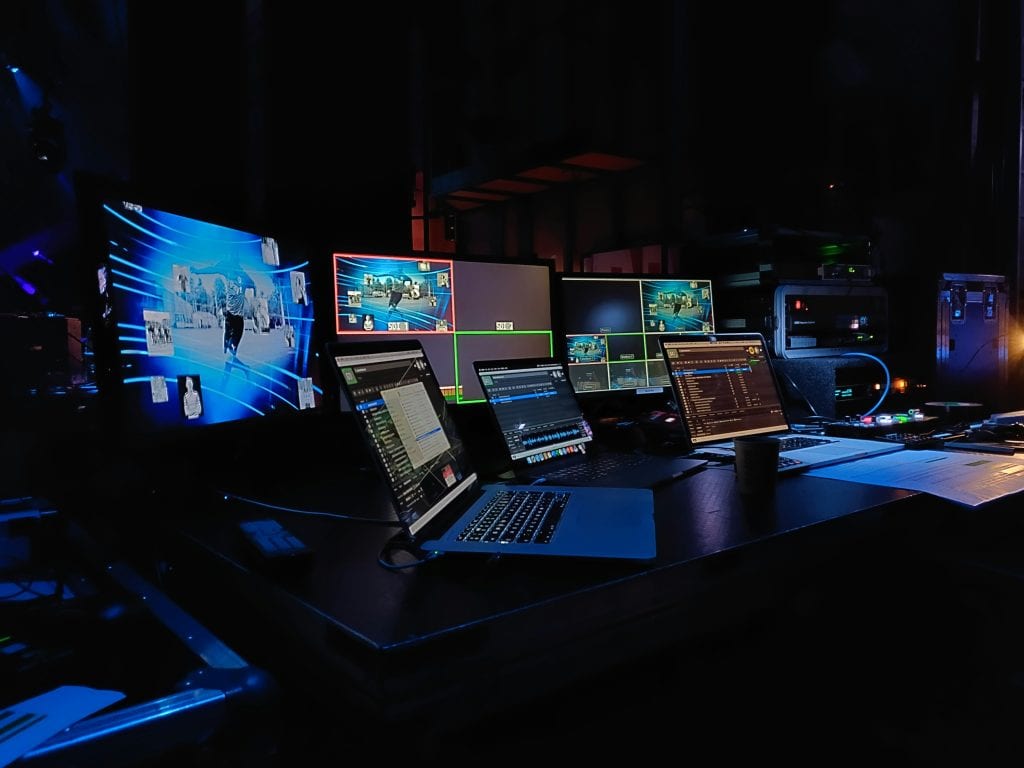
Strategic AV planning means locking in a realistic and detailed run of show (ROS) early. It means mapping transitions, cues, and timing dependencies before the pressure of show day takes over. It means aligning speakers, content, staging, and production in advance so every part of the event supports the experience you are trying to create.
It also means identifying risks early, clarifying ownership across teams, and resolving small issues before they become visible problems.
This is not about adding unnecessary process. It is about removing uncertainty.
And in event production, uncertainty is often what creates the most stress.
The Real Flex in Event Production
The event industry has spent too long celebrating the wrong things.
The real measure of success is not running on fumes, fixing preventable problems at the last minute, or being the one person everyone depends on to keep the event moving.
The real flex is a show flow that works in real time. It’s a team that does not rely on one person to carry the full weight of execution. It’s a planner who can step away without worrying that everything will fall apart. It’s having time to eat a full meal on show day. It’s finishing an event without feeling completely exhausted.
That kind of outcome does not happen by chance. It happens through strong planning, clear ownership, and an event strategy designed to support the people behind the experience, not just the experience itself.
The Vario Difference: AV as the Foundation, Not the Safety Net
At Vario, AV is not treated as the final step in the process. It is part of the foundation on which the event is built.
The goal is not to step in and save an event once problems appear. The goal is to build it with enough clarity, alignment, and structure that it never needs saving in the first place.
That starts with getting involved early enough to shape the run of show (ROS), translate the creative vision into something executable, and create alignment across planning, creative, and technical teams. It means designing show flows that work not just in theory, but under real event conditions where timing shifts, transitions matter, and every detail affects the audience experience.
The difference may seem subtle, but it is critical.
Reactive AV helps teams manage chaos. Strategic AV helps remove it.
How Better Systems Reduce Event Burnout and Create Repeatable Success
When events rely on heroics, every show feels like starting over. Teams end up solving the same problems again and again, often under pressure and with far less margin than they should have.
When events are built on strong systems, the outcome looks very different.
You get consistency across programs.
You get clarity across teams.
You get a process that can scale without creating unnecessary stress.
That leads to better team experiences, stronger client outcomes, and a more reliable event operation overall.
Most importantly, it creates an environment where people can sustain the work over the long term.
Because event burnout is not just a people problem, it’s a process problem.
Final Thought: Better AV Planning Creates Better Events
AV alone cannot repair a broken event plan.
But when AV is included in the planning process from the start, it becomes one of the most effective ways to reduce chaos, improve alignment, and prevent the last-minute pressure that leads to show day stress and burnout.
That is the value of early AV planning. It gives teams a clearer path to execution and creates event systems that hold up when conditions get real.
So no, working 14 hours straight is not the flex.
The real flex is an event that runs as designed, supported by a team, a plan, and a process strong enough that no one has to sacrifice themselves to make it succeed.